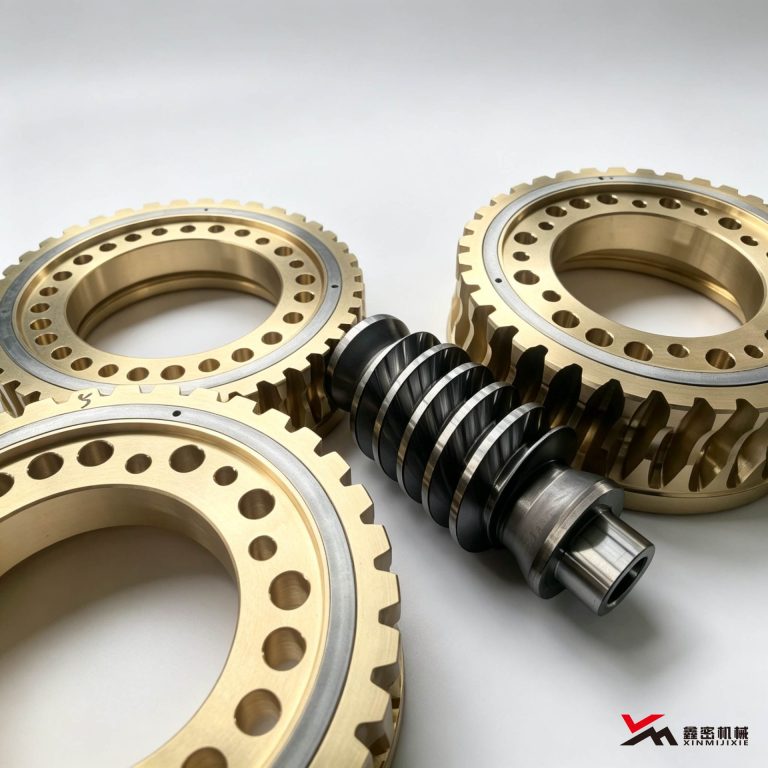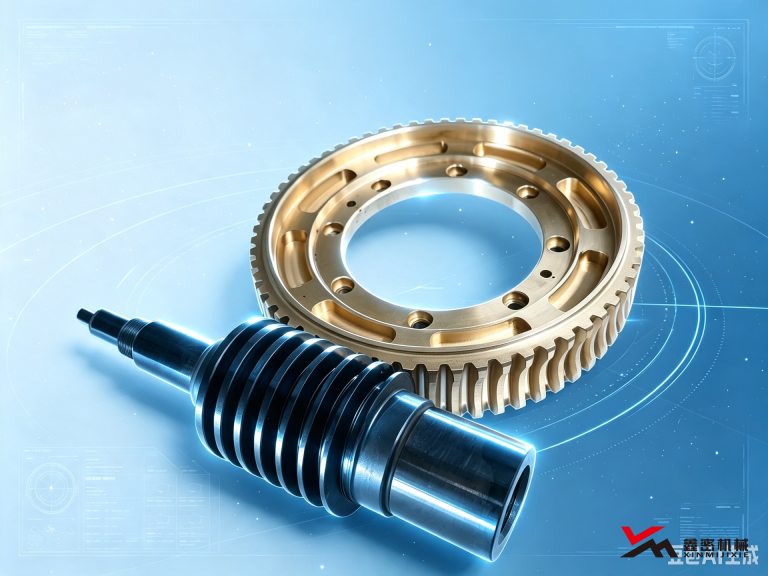
Worm-wheel material choice directly affects the load capacity, wear resistance and service life of the gear pair. Common industrial worm-wheel materials are tin bronze, aluminum bronze and brass, each matched to different duty conditions.
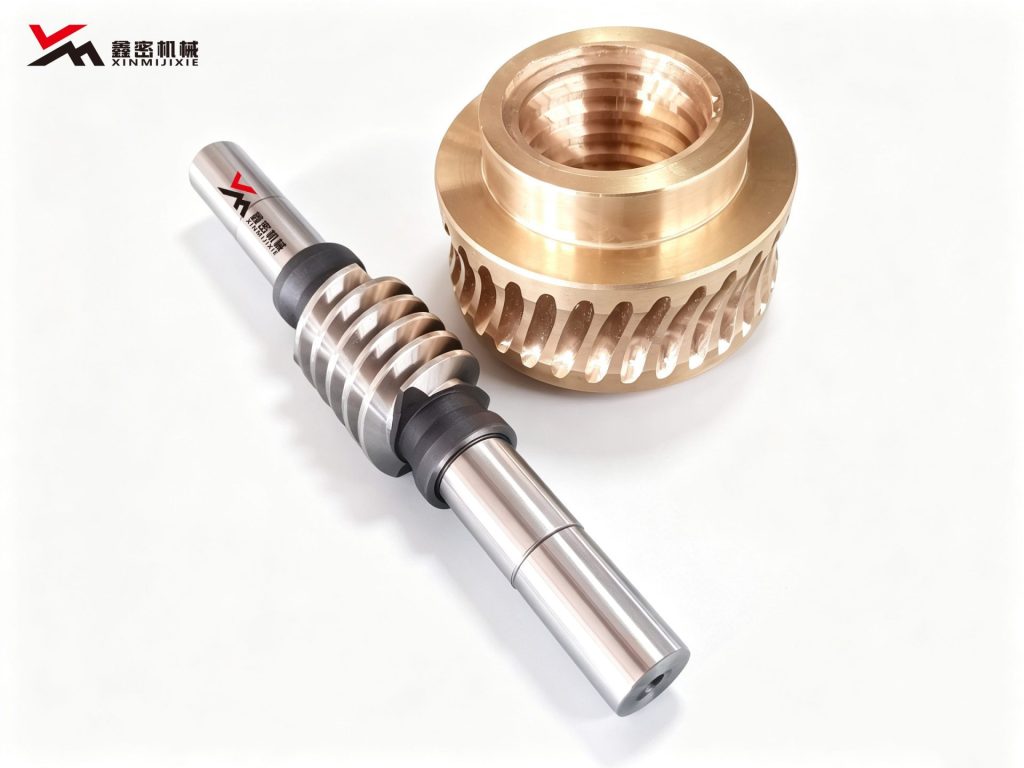
1. Tin bronze worm wheels
Tin bronze (commonly ZCuSn10Pb1, ZCuSn5Pb5Zn5) is the most widely used worm-wheel material. Features:
– Good anti-friction behaviour; low friction coefficient with a hardened steel worm
– Excellent wear resistance; suited to medium-speed continuous duty
– Strong anti-scuffing; less prone to seizure even under average lubrication
– Lower strength than steel; heavy-duty cases need calculation
Typical use: medium speed, medium load, continuous-duty reducers—the first choice for general industrial worm wheels.
2. Aluminum bronze worm wheels
Aluminum bronze (commonly ZCuAl10Fe3) has higher strength and hardness than tin bronze, but slightly weaker anti-friction behaviour. Features:
– High strength and large load capacity
– Good wear resistance; suited to low-speed heavy duty
– Anti-scuffing inferior to tin bronze; needs good lubrication
– Lower cost than tin bronze
Typical use: low-speed heavy load, intermittent duty—e.g. lifting/conveying and mining machinery.
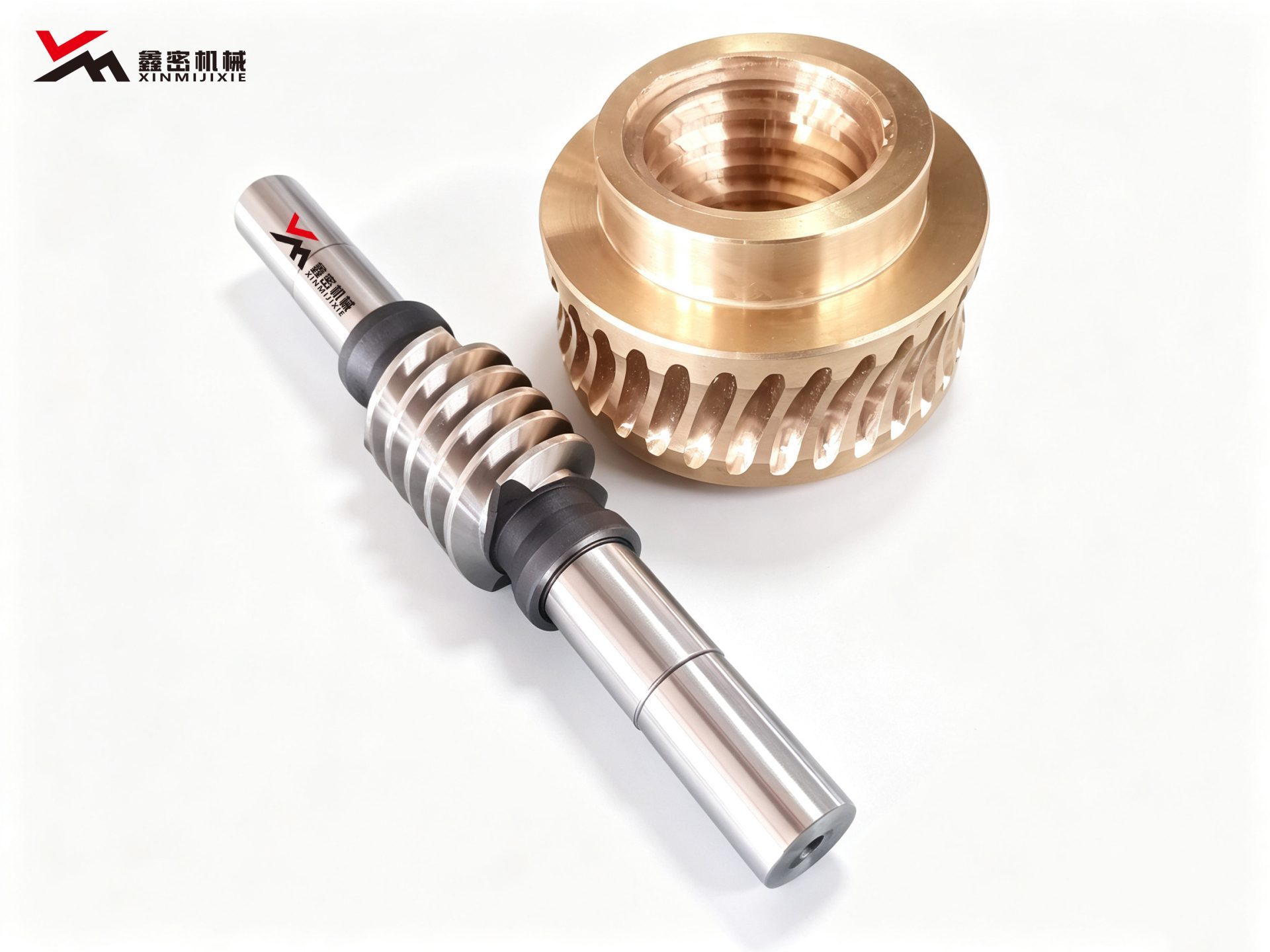
3. Brass worm wheels
Brass (commonly H62, HPb59-1) has the lowest strength but good machinability and low cost.
Typical use: light load, low speed, manual drive—instrumentation and hand adjustment mechanisms. Not suited to heavy continuous duty.
4. Matching worm material
Wheel and worm materials must be considered as a pair. Worms are generally alloy or carbon steel, surface-hardened above HRC45, then ground. Hardened steel worm with copper wheel is the classic anti-friction pairing.
If the worm is not quenched, the wheel should use tin bronze with better anti-friction behaviour—otherwise wear accelerates.
Dezhou Xinmi Machinery recommends worm-wheel alloys by duty, supports machining from drawings or samples, and ensures the mesh matches the operating regime.