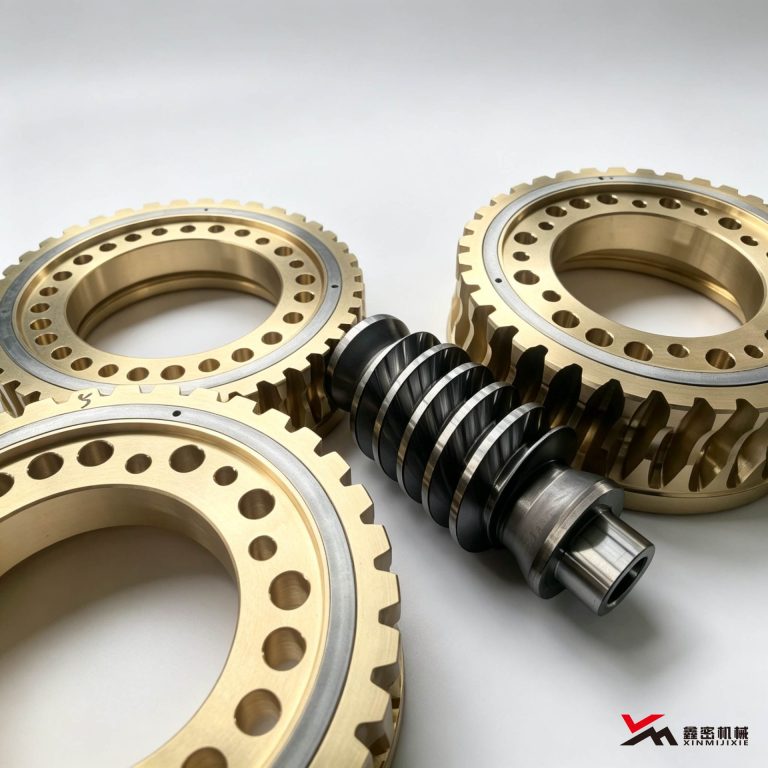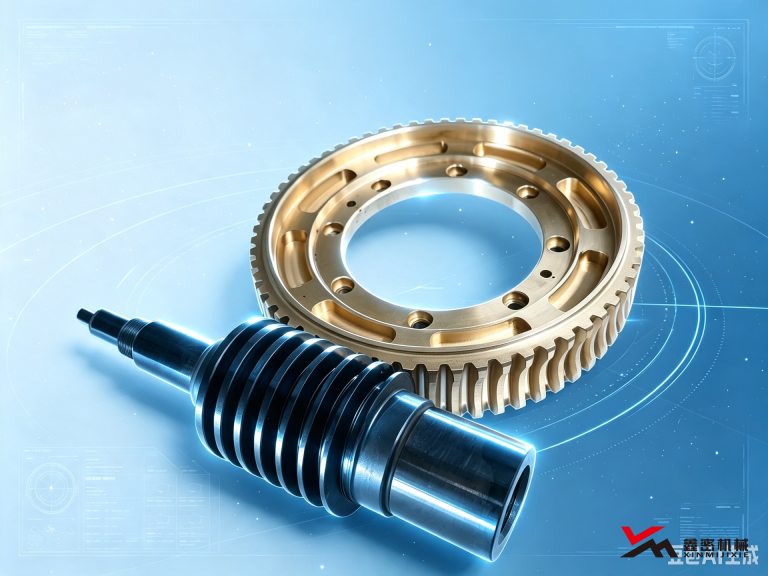
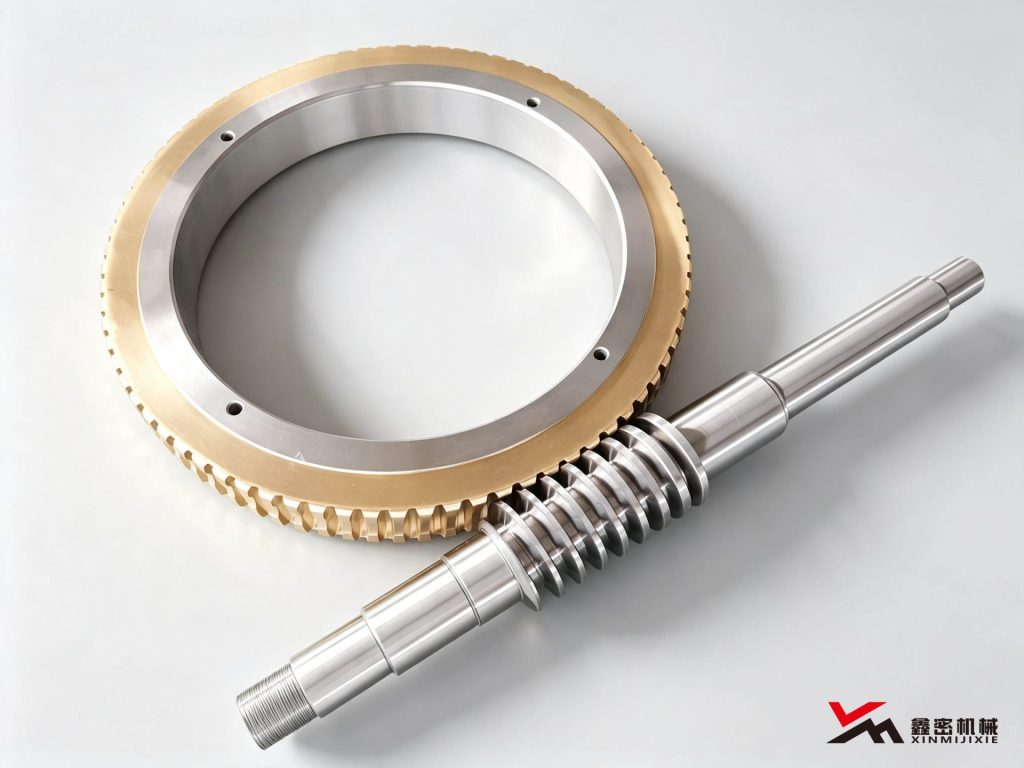
Worms are usually made from alloy steel or medium-carbon steel. Surface quenching raises flank hardness, then grinding brings the part to the required accuracy. Quench quality directly affects wear resistance and service life of the worm.
1. Why quench the worm
In mesh the worm slides against the wheel; the flanks see repeated contact stress and sliding friction. Without quenching, hardness is low and wear appears quickly. After quenching, flank hardness reaches HRC45–55 and wear resistance rises sharply.
Quenched worms also need grinding to secure flank roughness and tooth-form accuracy—something unquenched worms cannot achieve to the same level.
2. Common quenching methods
– High-frequency induction hardening: fast heat, low distortion, suited to batch production, uniform flank hardness.
– Carburizing and hardening: for low-carbon alloy steels; hard case, tough core; suited to heavy-duty impact duty.
– Through hardening: large distortion; seldom used.
3. Grinding allowance after quench
Quenching causes thermal distortion, so grinding stock must be left before quench. Typical flank stock is 0.15–0.25 mm; OD stock 0.1–0.2 mm. Too little stock and the form cannot be ground clean; too much wastes machining time.

4. Quenching precautions
– Control quench temperature strictly: too high risks overheating and cracking; too low fails hardness
– Temper promptly after quench to relieve residual stress
– Keep core toughness—do not harden the whole section too hard, or fracture risk rises
– After grinding, check flanks for cracks by magnetic particle or acid etch
When machining worms, Dezhou Xinmi Machinery selects the quench process from material and duty, leaves a rational grinding allowance, and assures flank hardness and accuracy.