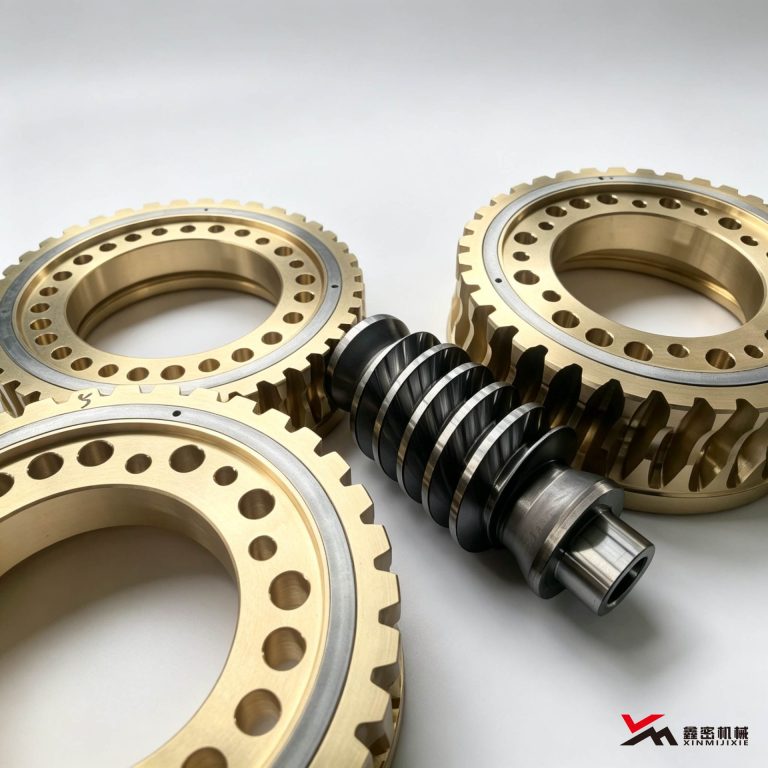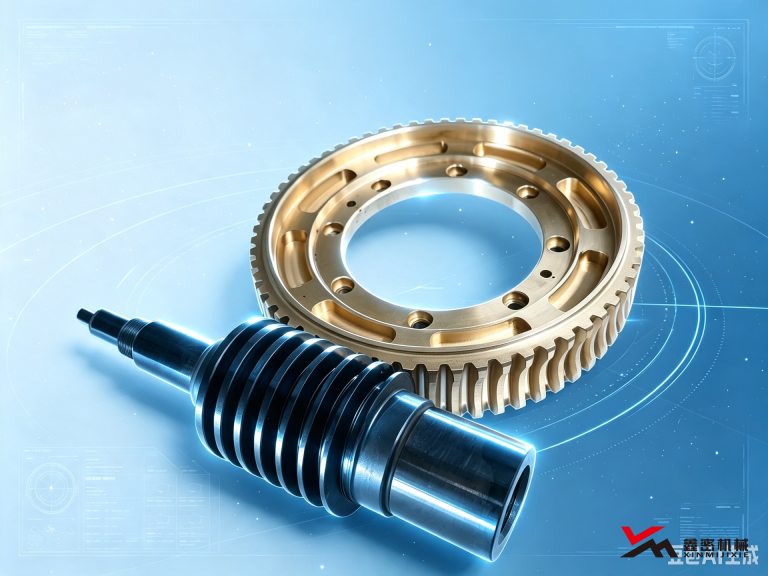
Accuracy, wear resistance, and service life of worm gear pairs depend primarily on manufacturing process and quality control. Identical nominal sizes from different suppliers can perform very differently. Below is a step-by-step breakdown of standard precision worm gear production and key QC checkpoints for procurement and engineering teams.
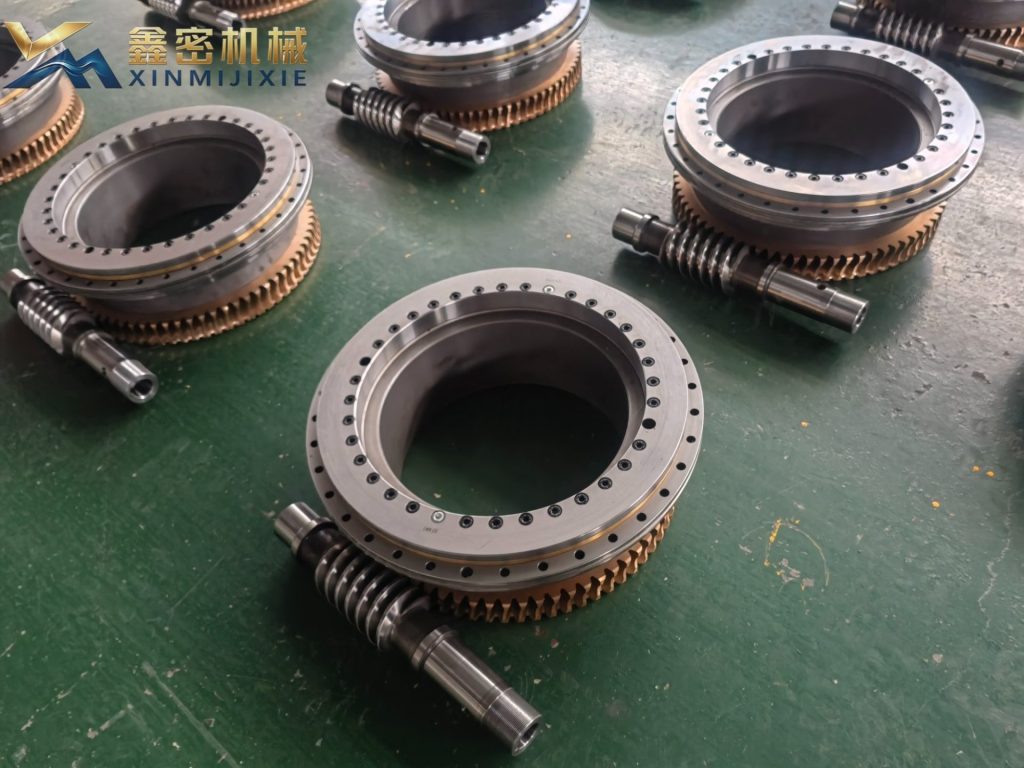
1. Raw Material Selection and Preparation
Wheels typically use high-purity tin or aluminum bronze; worms use alloy steels such as 40Cr. Incoming material is verified for composition and hardness; cracks, inclusions, and substandard hardness are rejected to avoid recycled or inferior stock.
2. Rough Machining
CNC lathes produce OD, faces, and steps to tolerance, leaving adequate stock for hobbing and grinding while controlling deformation in finish operations.
3. Hobbing
CNC hobbing machines cut tooth profiles, controlling module, tooth height, pitch, and pressure angle. Mesh quality directly affects smoothness and noise—this is the core process step.
4. Heat Treatment
Worms are quenched and tempered with surface hardening for flank hardness and core toughness. Bronze wheels undergo stabilization to relieve machining stress and prevent later distortion or cracking.
5. Grinding
High-precision sets are ground to correct heat-treat distortion, remove burrs, and optimize profile and lead accuracy—reducing noise, minimizing backlash, and improving positioning.
6. Final Inspection
Finished parts are checked for dimensional tolerance, profile error, lead error, backlash, concentricity, and hardness before release.
Process Summary
- Rough machining: CNC lathe—OD/face tolerance, machining allowance
- Hobbing: CNC hobber—module, pitch, pressure angle, profile
- Heat treatment: Quench/temper—surface hardness, core toughness
- Grinding: Grinder—profile/lead accuracy, surface quality
- Inspection: CMM/gear checker—tolerance, backlash, concentricity, hardness
Small Shop vs Full-Process Manufacturer
Some low-cost suppliers skip grinding, simplify heat treatment, skip incoming inspection, and omit final QC—resulting in rough flanks, poor accuracy, high noise, and short life. Full-process manufacturing with end-to-end QC is the foundation of batch consistency.
About Dezhou Xinmi Machinery
Dezhou Xinmi Machinery manufactures worm gears and reducers with in-house precision turning, hobbing, grinding, heat treatment, and inspection—supporting standard and custom products. Contact the engineering team to discuss duty and accuracy requirements.