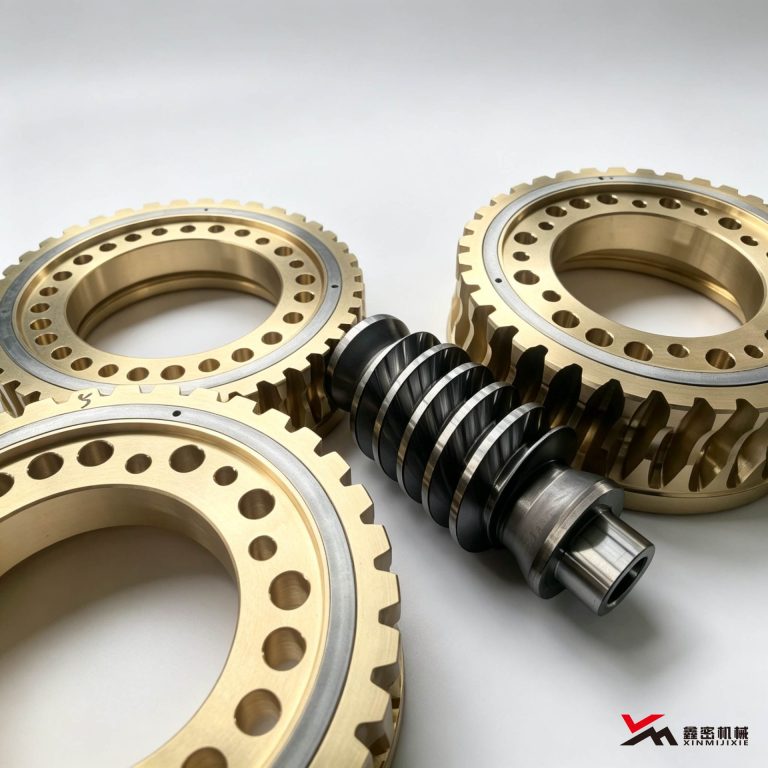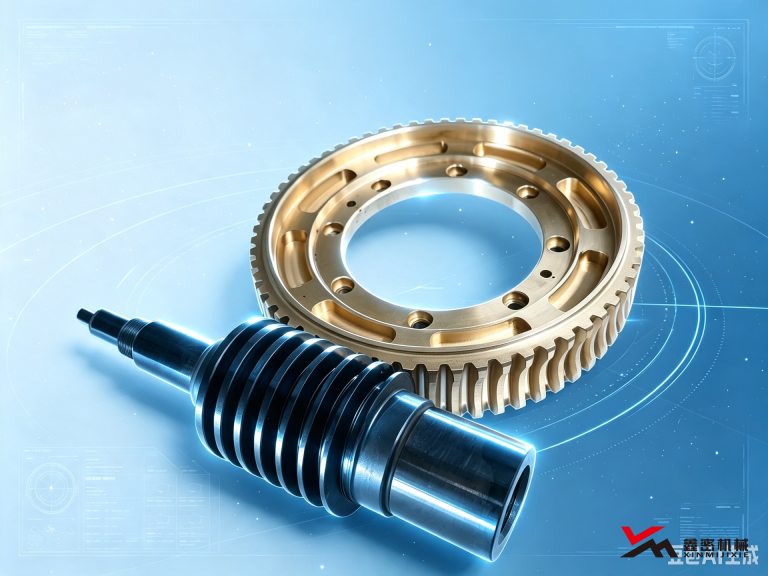
When worm gears show broken teeth or severe pitting and OEM parts are discontinued with no original drawings, equipment stops. Reverse measurement and replication produces replaceable non-standard worm gear sets.
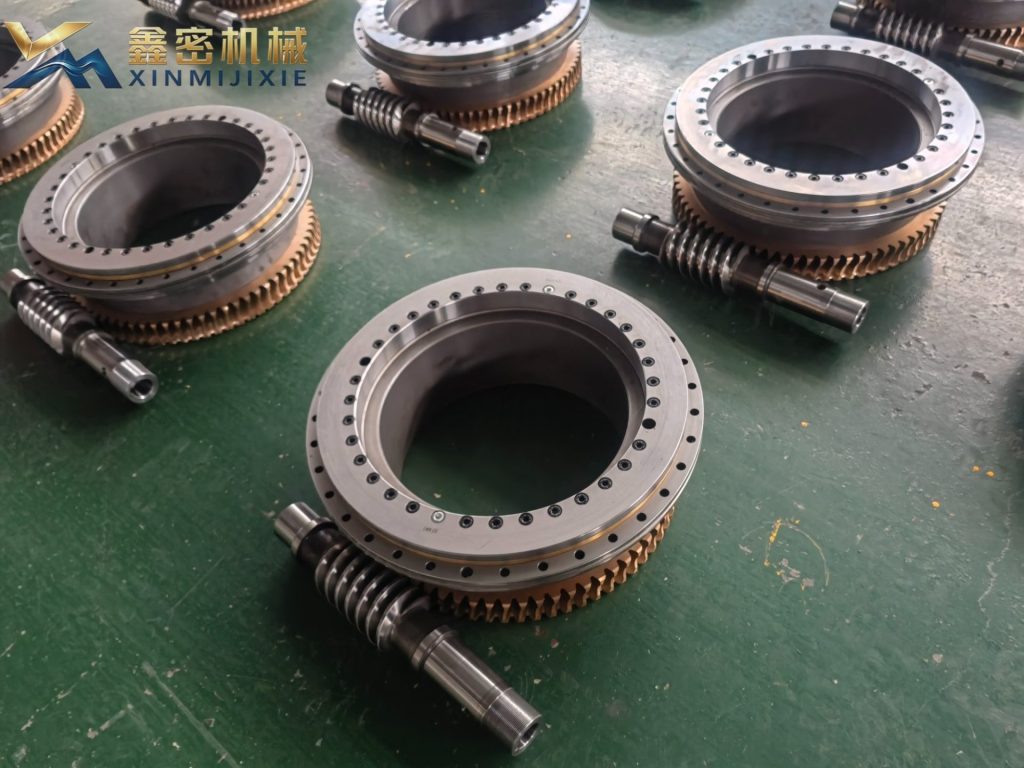
Worm gears are matched transmission pairs—measurement is not just OD and thickness. An error in module, pressure angle, lead, helix angle, or center distance prevents proper mesh.
Key Points for Replication
- Distinguish standard vs dual-lead worms first. Dual-lead tooth thickness varies along the axis—measuring worn thickness directly introduces large error.
- Measure worm lead and confirm helix hand; wheel and worm rotation must match.
- Measure center distance—the core dimension for mesh pairing.
- Worn parts require wear compensation—do not copy worn tooth thickness directly.
- Machine wheel and worm as a pair. Replacing one member alone often causes noise, heat, or seizure.
Some shops measure only outer dimensions and ignore tooth parameters—new parts then fail at assembly and delay projects.
How to Engage for Replication
Ship samples for measurement, or complete a dimension form for engineering review before production to reduce rework risk. Dezhou Xinmi Machinery replicates worm gears from legacy reducers, rolling mills, lifting platforms, and medical equipment. Call 13953486612 for consultation.