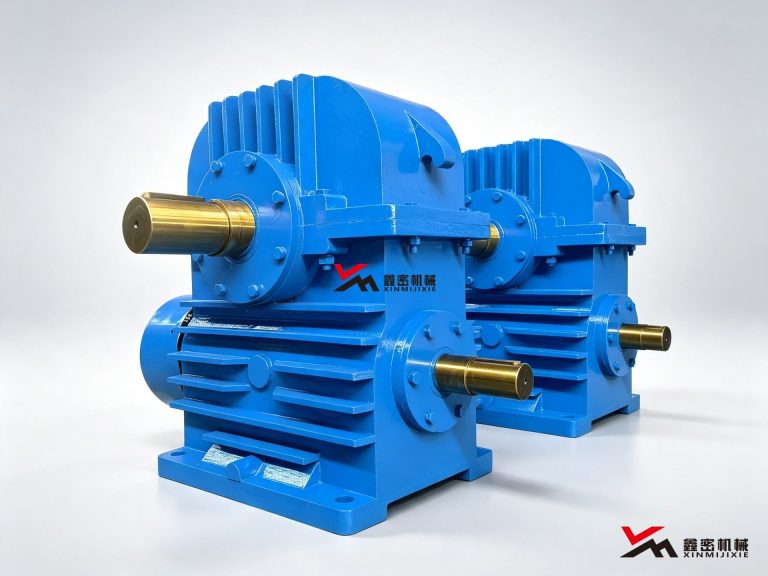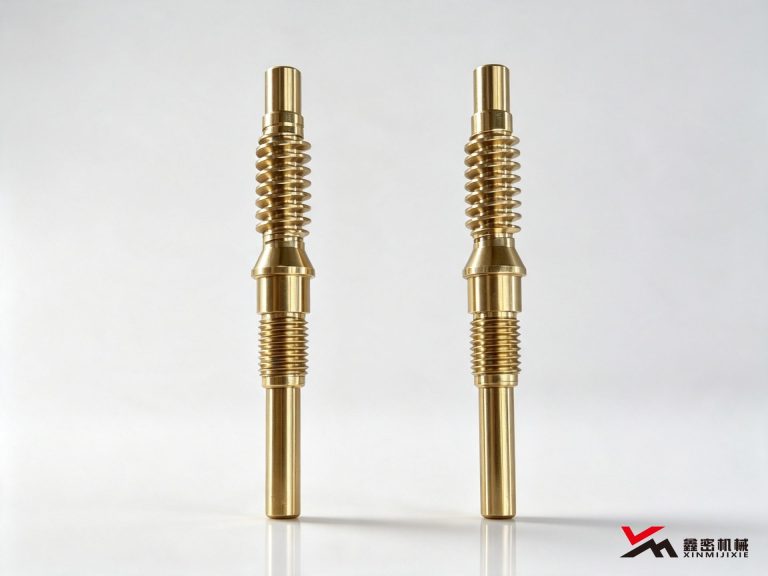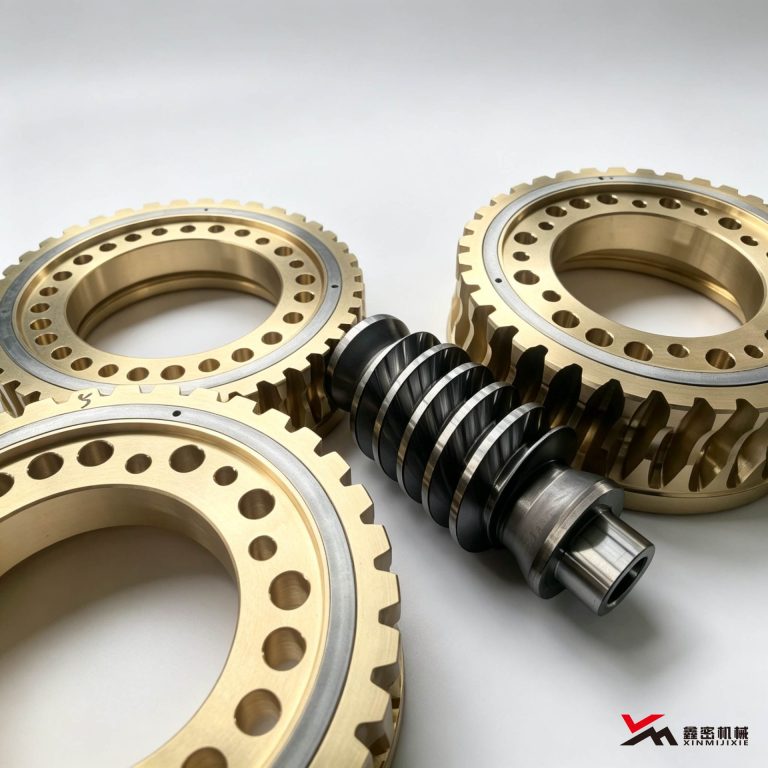
A standard worm gear pair leaves the factory with its backlash set and frozen. Run it through a year of reversing duty on a rotary axis and that clearance opens up — the table takes up slack before it moves, positioning repeatability drifts, and the only real fix is pulling the pair and replacing it. The variable tooth thickness worm gear pair exists to break that cycle. By tapering the worm tooth continuously along its axis, it lets you shift the worm axially and take accumulated wear back out of the mesh without touching the center distance or swapping parts. Below is what that geometry buys you, what it costs, and what to nail down before you send an inquiry.
What a Variable Tooth Thickness Worm Pair Actually Does
In a conventional worm pair, tooth thickness is constant along the worm axis. The clearance between the worm flanks and the wheel teeth is set at assembly by the center distance, and from that point on it only gets bigger. That is fine for a conveyor drive. It is not fine for an axis that has to return to the same position after every reversal.
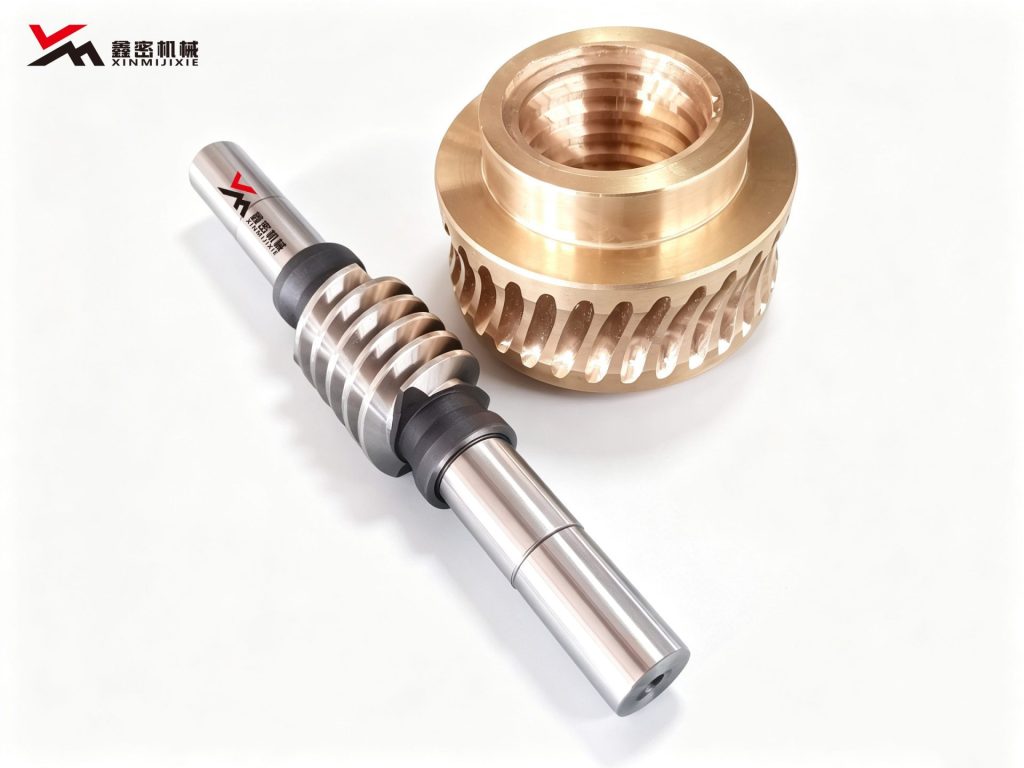
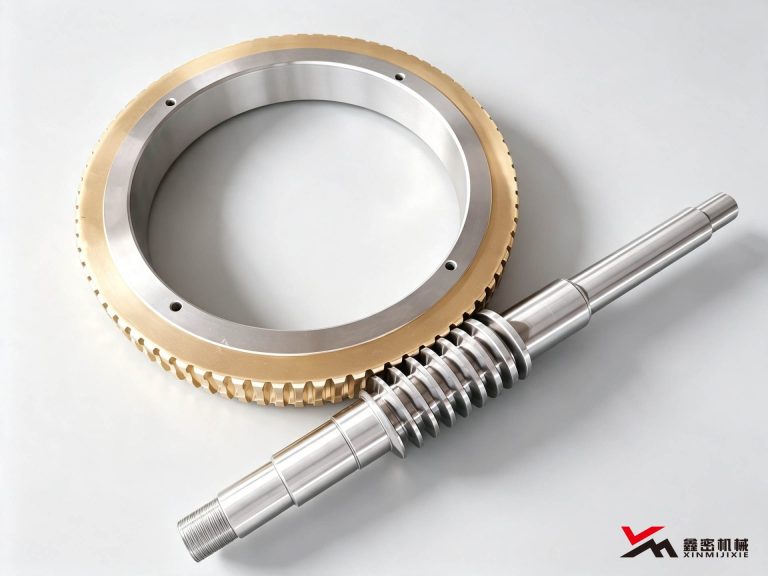
A variable tooth thickness worm is cut so that the tooth grows thicker along the axial direction — effectively a continuous taper. The worm meshes with a matching helical gear or straight worm wheel. Because the taper is continuous, sliding the worm axially feeds a slightly thicker (or thinner) section of tooth into the mesh, which directly changes the working clearance. Backlash becomes an adjustment, not a fixed property.
The key point for a maintenance planner: the center distance never changes. You are not re-shimming the wheel or moving bearing housings. You are using the axial freedom built into the worm itself, which is why this design shows up wherever wear has to be compensated in place.
Where Adjustable Backlash Earns Its Keep
Not every drive needs this. If your gearbox runs one direction at steady load, a standard pair will do the job for less money. The variable thickness design pays off when one of these conditions is on your spec sheet:
- Precision positioning — rotary axes and indexing tables that must hold near-zero backlash through repeated reversals.
- Machine tool rotary axes — fourth and fifth axes where lost motion shows up directly in part accuracy.
- Lift and hoist mechanisms — drives that rely on worm self-locking to hold load, and where backlash growth degrades hold confidence.
- Packaging and printing rollers — shock loads and frequent starts that accelerate flank wear beyond what a fixed-clearance pair can absorb.
For general power transmission — a mixer, a slow conveyor, a gate operator — the standard pair remains the sensible choice. Paying for adjustable backlash on a drive that never reverses under precision requirements is wasted machining cost.
The Geometry Behind the Adjustment
The taper is the whole trick. On a variable thickness worm, the tooth profile tapers continuously from one end to the other, while the pressure angle and tooth form stay consistent along the flank. When the mesh loosens from wear, you shift the worm a fraction of a millimeter toward the thicker section. The thicker teeth take up the clearance, and the wheel keeps running on the same flank surfaces it has already bedded in.
This is why the contact pattern stays stable after re-shimming. The wheel is not being forced into a new mesh position — the worm is simply presenting more material to the same engagement zone. On a standard pair, by contrast, clearance is fixed at a fixed center distance, and once it grows past your tolerance the only remedy is replacement of the set.
Specs and Materials to Expect on a Quote
When you request a variable tooth thickness worm pair, the quotation will usually be framed around these parameters. Having them ready speeds up the exchange:
- Module range: typically module 1 to module 10
- Center distance: 25 mm to 500 mm covers the common band
- Worm material: 20CrMnTi, carburized and hardened to HRC 58–62
- Wheel material: tin bronze or phosphor bronze for precision duty; cast iron where load is light and cost matters
- Precision grade: ISO 1328 grade 6–8 is the typical offering for positioning work
- Backlash adjustment range: depends entirely on the axial shift allowance — get this stated in writing
The bronze-on-hardened-steel combination is not arbitrary. The worm runs at high surface hardness against a softer wheel so that any bedding-in wear happens on the replaceable-cheaper component, and the pair keeps its contact pattern as it settles.
What You Gain, and What You Pay For
The honest comparison looks like this. On the gain side: backlash is adjustable after wear, which stretches service life well past the point where a standard pair would be scrap. Positioning repeatability holds up under reversing loads because you can re-tighten the mesh instead of tolerating drift. And after adjustment, the pair maintains full tooth contact — you are not trading contact area for clearance.
On the cost side, two trade-offs matter. First, machining and inspection are more expensive: cutting a controlled taper and verifying the contact pattern takes more time than producing a constant-thickness worm. Second, assembly and maintenance demand more skill. The pair needs periodic retuning, and over-tightening the mesh causes tooth interference, heat, and rapid wear — worse than the backlash you were trying to remove.
For low-precision duty, the standard pair wins on price and simplicity. For an axis where lost motion costs you scrap parts or failed positioning, the lifetime math usually flips in favor of the adjustable pair.
Typical Applications
Where these pairs actually end up in service:
- CNC rotary tables and fourth-axis units
- Elevator and stage lifting drives
- Robot arm joints with reversing torque
- Valve actuators in process plants
- Conveyor tensioning and indexing stations
- Telescope and radar position mounts
The common thread is reversal under position control, or a holding requirement where backlash growth is unacceptable. If your application has neither, you are likely specifying more gear than you need.
Selection Checklist Before You Inquire
A supplier can quote accurately only if the duty is defined. Work through this list before you send the first email:
- Define torque, speed, and duty cycle first — continuous, intermittent, or shock loading changes the material call.
- Specify the backlash tolerance for the axis, in arc-minutes or millimeters at the output.
- Confirm the center distance and mounting envelope, including the axial space available for worm shift.
- State the lubrication type: oil bath, grease, or spray — it affects sealing, materials, and the retune interval.
- Request a tooth contact pattern inspection report with the pair, not just dimensional data.
- Ask about the axial shimming method and range, so your maintenance crew knows how the adjustment is actually made.
Frequently Asked Questions
Can a variable tooth thickness worm pair be retrofitted into an existing housing?
Sometimes. The housing must allow axial movement of the worm, the center distance must match the original design, and the bearing arrangement has to support axial adjustment — typically a shimmed or threaded end cap. If the original gearbox fixes the worm axially with no adjustment provision, retrofit is usually impractical.
How often should backlash be readjusted?
It depends on load cycles and lubrication condition. A heavily loaded indexing axis may need attention in months; a lightly loaded positioner can run for years. The practical method is to inspect the contact pattern at scheduled intervals and follow the manufacturer’s torque-retention guidelines rather than waiting for positioning errors to show up in the work.
Does adjustable backlash reduce load capacity?
Properly adjusted, no — the pair carries its full rated torque. The risk runs the other way: over-adjustment pushes the mesh toward tooth interference, which generates heat and flank damage. Stay within the stated axial shift limits and the rated capacity holds.
What maintenance does it need compared to a standard pair?
Two additions: periodic backlash measurement with a dial indicator, and a contact pattern check after each adjustment. Otherwise the lubrication schedule is the same as for any standard worm set.
Are variable thickness pairs more expensive?
Up front, yes — gear cutting and inspection cost more than for a constant-thickness worm. Over the life of a precision axis, the math often reverses, because you are re-shimming instead of buying replacement sets. For low-precision duty, the standard pair stays cheaper end to end.
Get a Selection Review for Your Drive
If you are weighing a variable tooth thickness worm pair against a standard set for a specific axis, send us the torque, speed, backlash tolerance, and mounting envelope. We will review whether the adjustable design actually pays off for your duty cycle — or tell you plainly that a standard pair is the better buy. Either way, you get the contact pattern inspection data and the axial shift range stated up front, so there are no surprises at assembly.